
Books
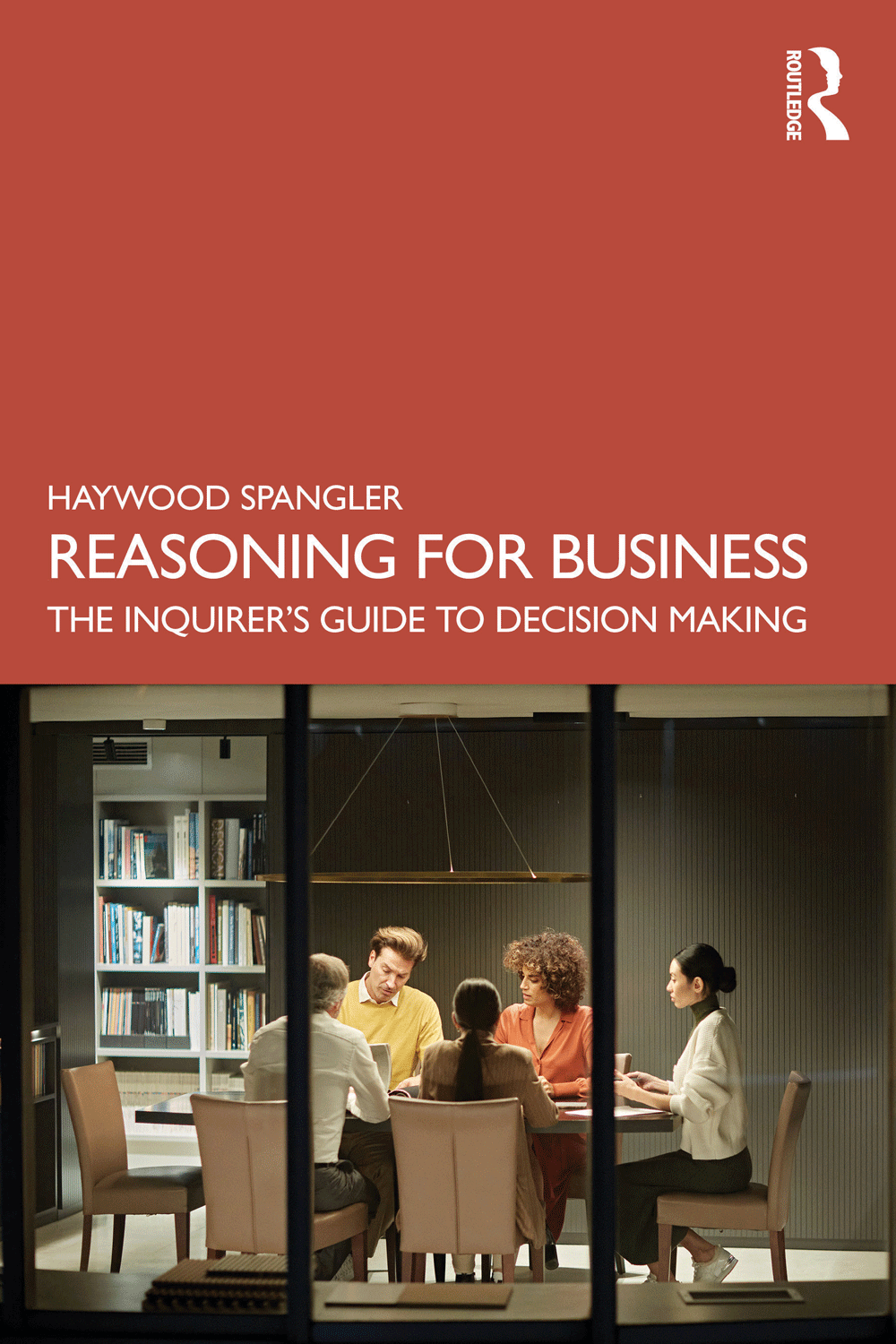
Reasoning for Business
The Inquirer’s Guide to Decision Making
(Routledge, 2026)
Order from:
Amazon Amazon Hot New Releases
Routledge Use Code 25ESA4 for a 20% discount
The Management Body of Knowledge
(American Management Association, 2020)
Contributing Chapters:
Chapter 5: “Motivation”
Chapter 15: “Critical Thinking”
Chapter 19: “Ethics”
Order from Amazon
Feasting on the Word, Year C, 4-Volume Set
(Westminster John Knox Press, 2010)
Contributiing Articles:
“Homiletical Perspective on Psalm 95,” vol. 2., p. 80
“Homiletical Perspective on 1 Kings 19:1-15,” vol. 3, p. 151
“Homiletical Perspective on 2 Kings 2:1-14,” vol. 3, p. 181
“Homiletical Perspective on 2 Kings 5: 1-14,” vol. 3, p. 199
“Homiletical Perspective on Psalm 70,” vol. 2., p. 236
“Homiletical Perspective on Psalm 78,” vol. 1., p. 310
“Homiletical Perspective on Psalm 90,” vol. 1., p. 318
Order from Westminster John Knox Press
White Papers
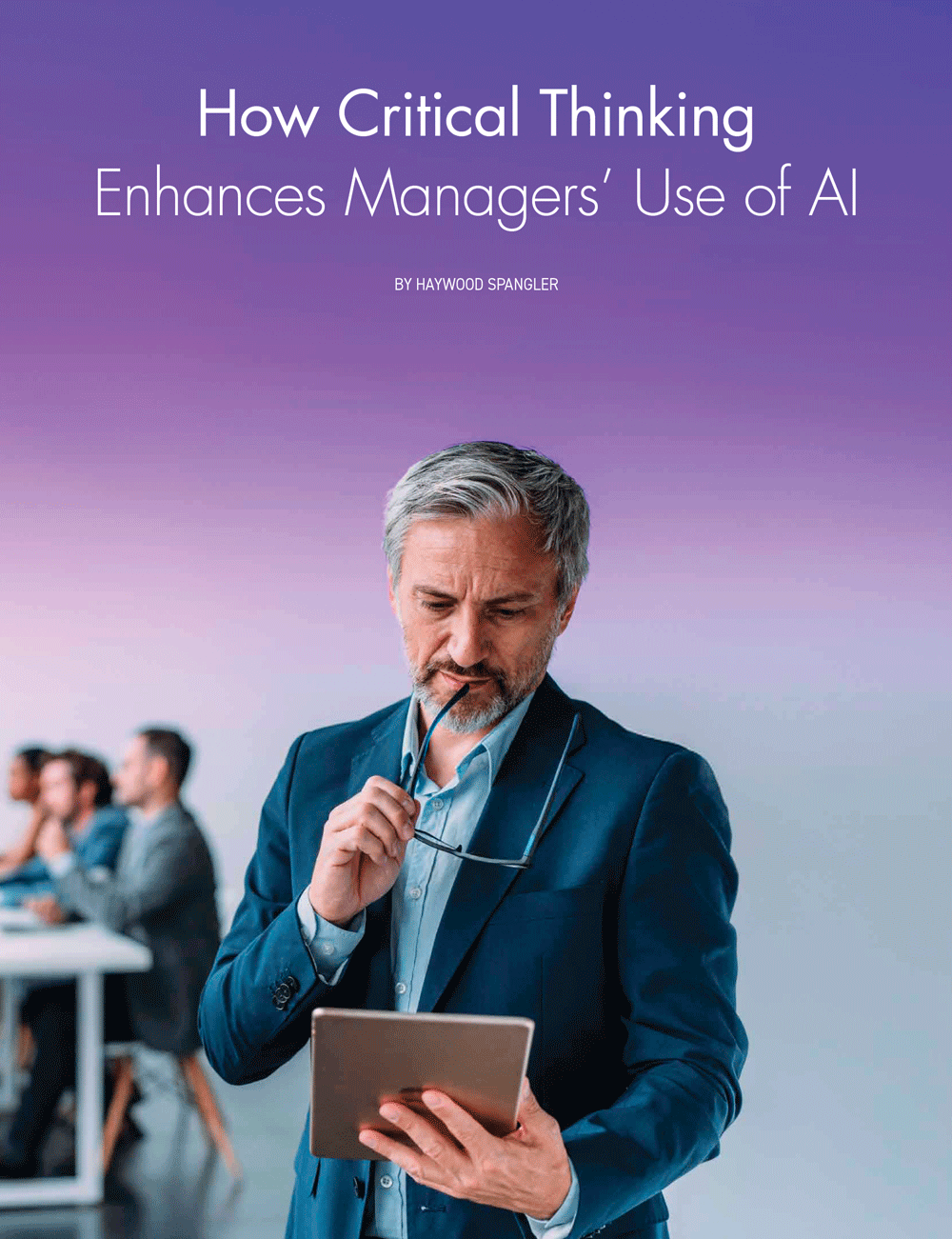
AMA Quarterly Winter, 2024-2025
How Critical Thinking Enhances Managers’ Use of AI
AMA
Striving for Excellence, Mastering the Skills that Drive Performance
Based on research with over 2,000 professionals, at all organizational levels, across more than 20 industries.
Electronic Journal of Business Ethics and Organization Studies, 2024
Societal Impact: Beyond Frameworks
Presentations & Seminars
The Role of Today’s Manager: Empowering Managers in a Dynamic Workplace
A research briefing unpacking the key findings from AMA’s newest survey exploring what’s changed, what’s working, and what leaders need to do next.
Ethical Decision-Making Preferences and Associated Moral Distress in Inpatient Nursing Staff
Nurses face significant stress in daily patient and family care, including ethical dilemmas. The ambiguity of these situations and differing ethical decision-making preferences can lead to moral distress. Increasing nurses’ awareness of ethical decision-making preferences may support more effective decision-making when dilemmas arise.
ASTD: Sharpening the Critical Thinking Skills of Government Leaders
Government employees learn tools and tips on applying critical thinking in the workplace: the skills to challenge old assumptions; rethink conventional approaches in the context of today's realities; choose the right techniques to identify important information, and recognize assumptions to draw conclusions.
Bridging the Gap: Beyond Sexual Harassment Prevention Policies to Organizational Culture Changes
Presented at the ATD 2018 International Conference and Exposition in San Diego, CA
Articles
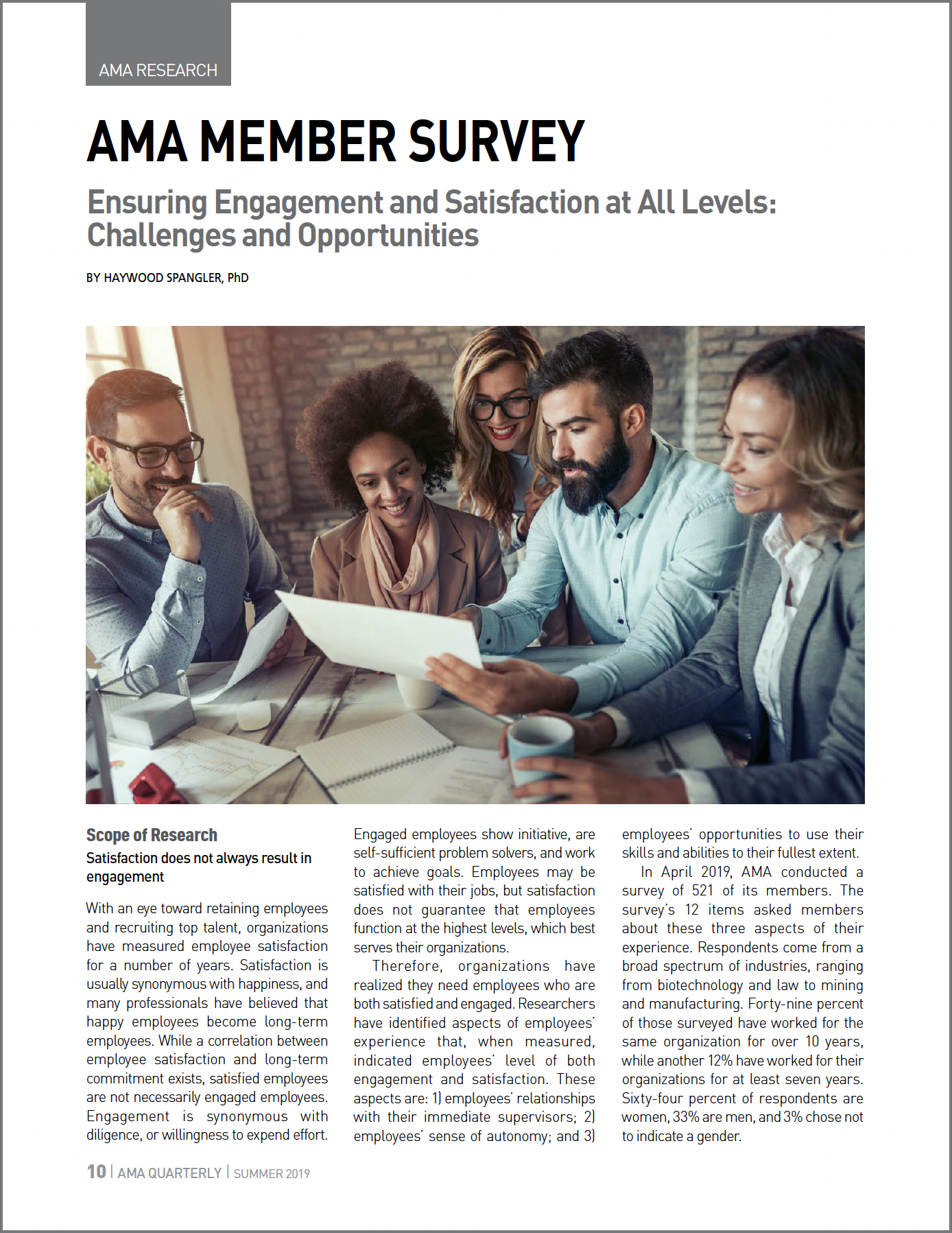
AMA Member Survey | Ensuring Engagement and Satisfaction at All Levels: Challenges and Opportunities
With an eye toward retaining employees and recruiting top talent, organizations have measured employee satisfaction for a number of years. Satisfaction is usually synonymous with happiness, and many professionals have believed that happy employees become long-term employees. While a correlation between employee satisfaction and long-term commitment exists, satisfied employees are not necessarily engaged employees. Engagement is synonymous with diligence, or willingness to expend effort.
Making Creativity & Innovation More Than a Slogan
Creativity is the key to ideating—coming up with new ideas—and stimulating creativity is a key to innovating. Stimulating creativity to drive innovation is partly a matter of recognizing organizational and cultural obstacles in order to navigate around them. It’s also a matter of deliberately engaging people in ways that leverage their strengths, creating a dynamic of constructive dissonance that fuels their thinking.
Stimulate Creative Thinking to Make Innovation a Reality
While innovation has always been the purview of R&D, an increasing number of companies expect professionals in all roles and at all levels to innovate. Many professionals say, “Innovate? My brain has been trained to do the opposite. I’m supposed to keep things ahead of schedule and under budget.” People feel perplexed, if not intimidated, by the imperative to “innovate.” For many, coming up with new ideas—ideating—is the biggest challenge. Enter creativity, the key to ideating.
AMA Research | Implications of the 2020 Pandemic: Managing Through Uncertainty
Research shows the pandemic led employees to become more self-directed, agile, and innovative, while maintaining team connections. The study revealed that remote work fostered creativity, improved communication, and enhanced autonomy, challenging traditional assumptions about the necessity of in-person interactions for productivity and collaboration. Organizations must now build on these positive changes to succeed in a world of uncertainty.
Special Correspondent to the Richmond Times-Dispatch

Faith and Values Column
Is our morality becoming ‘Janus-faced’?

Faith and Values Column
The inauguration and civil religion.

Faith and Values Column
Framing civil religion as part of public life: Is ‘civil religion’ evolving in U.S.?